

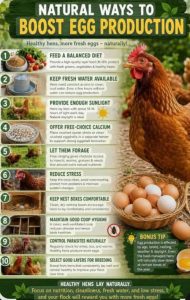
 1). To get more eggs from your layers, provide them with proper quantities of layer mash per day, i.e 120 grammes per bird
2). Feed birds a dedicated 16% – 18% crude protein layer feed once they reach 18 weeks and older
3). Add crushed eggshells, limestone or oyster shells daily to build strong eggshells
4). Always provide fresh, clean water in washed troughs
RELATED: What and How to feed Sick Poultry
5). Mix approved commercial egg boosters containing vitamins, amino acids and electrolytes into the feed or water during peak production
6). Provide 14 – 16 hours of light daily using natural and artificial light to stimulate the laying glands
RELATED: How farmers can prepare for, not fear, El Nino weather season!
 7). Keep the coops quiet and secure from predators and not overcrowded to prevent drops in production
8). Vaccinate on time against Newcastle disease and Gumboro, and deworm regularly
9). Remove sick, past 72-week-old and non-productive hens that eat feed without laying
10). Supplement poultry diet with natural options like insect larvae, sunflower seeds or cooked legumes
RELATED: Common Diseases That Afflict Your Poultry
11). Clean out damp bedding regularly and keep nests quiet and dark so hens feel secure
12). Collect eggs twice a day to discourage broodiness
13). Routinely check and treat your birds for mites, lice and worms that drain their energy and stop egg production.
#chicken #poultry #eggs #feed #farming
RELATED: Here’s Your September 2026 – February 2027 Weather Forecast



0 Comments