

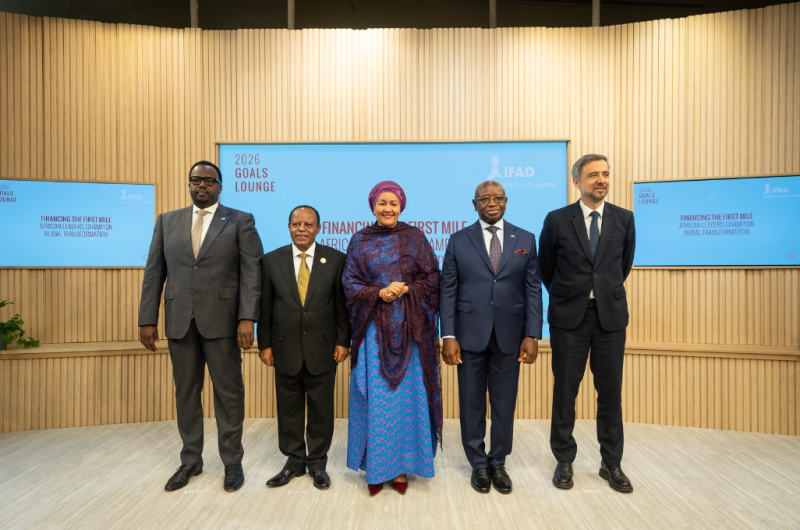
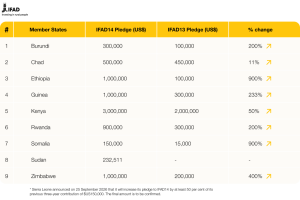
 Ten African countries are increasing their contributions to the International Fund for Agricultural Development (IFAD) and calling on international partners to match their ambition to accelerate rural transformation.
Burundi, Chad, Ethiopia, Guinea, Kenya, Rwanda, Sierra Leone, Somalia, Sudan and Zimbabwe have sent a strong signal that investing in agrifood systems must be a strategic global priority and is central to economic opportunity, food security and stability.
RELATED: Food Crisis to Persist in Sub-Saharan Africa as Politicians Mortgage Public Land to Foreigners
 “Kenya’s 50 per cent increase in its pledge to IFAD is an investment in our rural communities, and especially our young farmers who represent one of Africa’s greatest opportunities for growth and transformation. I join my fellow African leaders in calling on other donors and development partners to match our momentum by increasing their contributions to IFAD14 to drive rural prosperity, strengthen food security and build resilience in Africa and beyond,” William Ruto, President of Kenya, notes.
RELATED: Why Africa’s Burgeoning Population is Good for Agribusiness
 Taye Atske Selassie, President of Ethiopia, says “Ethiopia’s commitment to IFAD14 reflects a fundamental conviction: food security, economic prosperity, and the future of our youth are inseparable from the success of our smallholders. Transforming Africa’s agriculture from a burden into an engine of growth requires that our continent takes primary responsibility for financing its own rural development”
Saying “Agriculture is the foundation of food security, our livelihood and our future,” Julius Maada Bio, President of Sierra Leone, observes that “we must invest in people who produce our food if we want to transform food systems and create jobs.”
RELATED: Partnership to Transform Africa’s Agrifood Systems Formed
 Together, these black African countries have pledged nearly US$9 million to IFAD’s fourteenth replenishment cycle for 2028-2030 (IFAD14). Several countries have more than tripled their commitments, with the largest increases reaching nearly ten times their previous three-year contributions to IFAD.
These pledges come at a critical moment for the African continent. Beyond food security, investment in rural areas is increasingly central to Africa’s economic transformation and to helping communities adapt to the growing impacts of climate change. With the largest generation of young people in its history entering the labour market, investing in rural economies will help shape Africa’s economic trajectory for decades to come.
RELATED: Why and How Africa Can Feed the World!
 “African leaders recognize IFAD14 as a critical platform for strengthening the continent’s agrifood systems,” said Alvaro Lario, President of IFAD. “With nearly 60 per cent of IFAD’s portfolio invested in Africa and the Fund’s focus on the ‘first mile’ of food systems, IFAD is uniquely positioned to both channel and catalyze investment to rural areas where the greatest opportunities exist to create jobs, build resilience and accelerate inclusive growth.”
 IFAD’s unique financial model delivers greater development impact by combining Member States’ contributions with loan repayments, supplementary funds, borrowed funds and various types of cofinancing with national governments, partner institutions, private-sector actors and small-scale producers.
With an AA+ credit rating and as the only United Nations fund authorized to issue sustainable bonds on capital markets, IFAD is a global leader in innovative, market-based solutions to drive rural transformation, issuing over US$1 billion in sustainable bonds since 2022.
RELATED: How to secure your home against snakes and wild animals during El Nino rains
This model allows IFAD to turn every dollar of core contributions into approximately six dollars of investment on the ground, catalyzing investment to small-scale farmers, rural enterprises and climate-resilient food systems.
According to IFAD’s latest development effectiveness report, projects assessed under its most recent replenishment cycle increased rural incomes by an average of 34 per cent, boosted agricultural productive capacity by 35 per cent and improved market access by 34 per cent.








0 Comments